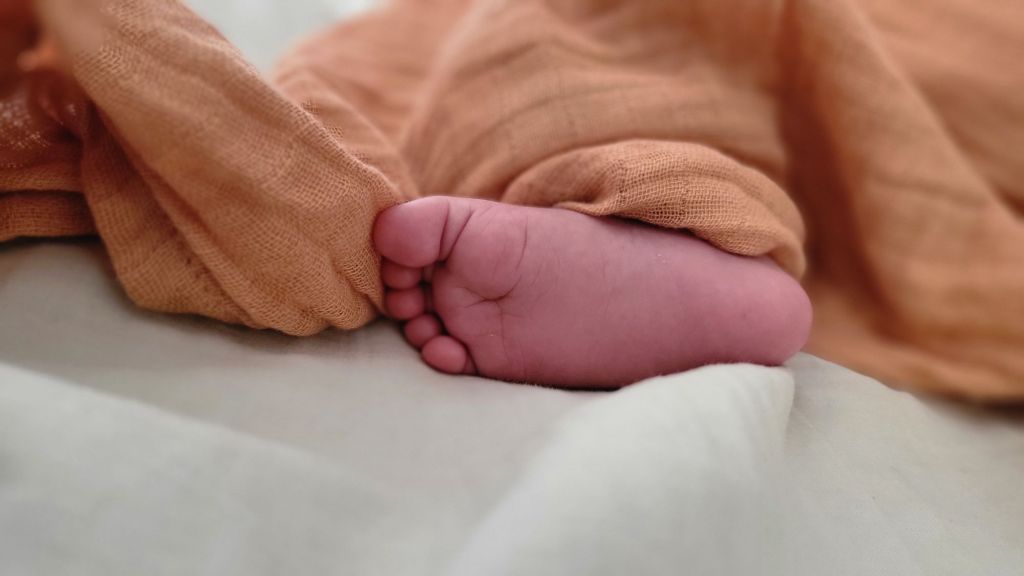
A few days ago, I read comments from a local councillor describing IVF as a “lifestyle choice”.
I stopped scrolling and read the words again.
A lifestyle choice.
The words, cool and indifferent, sat there as if they had never brushed against a human life.
A lifestyle choice.
Not medicine. Not treatment. Not the quiet, stubborn act of trying to build a family in the shadow of a diagnosis.
The phrase lodged itself somewhere between disbelief and fury — though, if I’m honest, the fury arrived first. Because when you have lived inside infertility, when you have felt its weight settle into the corners of your life, hearing it reduced to a choice feels like a small act of erasure.
My daughter exists because of IVF. Not metaphorically. Not theoretically.
Literally.
My daughter exists because of IVF. Not metaphorically. Not theoretically.
Literally.
Without fertility treatment, there is a very real possibility I would never have become a mother. I had lost the only pregnancy – the only baby – I had ever conceived after years of trying to become a mother, of trying to build a family, and then came the diagnosis: Primary Ovarian Insufficiency (POI), a name that explained a lifetime of symptoms dismissed as “women’s problems,” a name that closed doors even as it opened a path.
This isn’t speculation.
It is the reality of living with POI — a condition that caused my ovaries to stop functioning long before they should have, one that alters hormones, weakens bones, shadows the heart, and rearranges the future.
Infertility was not a lifestyle choice.
It was the symptom of a recognised disease.
Nobody would look at those aspects of the condition and describe treatment as a lifestyle choice.
Yet somehow, when the symptom is infertility, the language changes.
The treatment becomes optional.
The patient becomes selfish.
The desire for a child becomes a luxury.
But infertility is recognised by the World Health Organisation as a disease of the reproductive system. IVF is a medical treatment.
And POI is only one of many reasons people find themselves needing fertility treatment.
For some, infertility is linked to endometriosis, PCOS or blocked fallopian tubes. For others, it is the result of male-factor infertility, cancer treatment, genetic conditions, recurrent pregnancy loss, or causes that remain unexplained despite years of investigations.
The details may differ, but the reality is the same: infertility is a medical condition, not a lifestyle choice.
The details may differ, but the reality is the same: infertility is a medical condition, not a lifestyle choice.
We don’t call a hip replacement a lifestyle choice because someone wants to walk without pain.
We don’t call cataract surgery a lifestyle choice because someone wants to see clearly.
We don’t call hearing aids a lifestyle choice because someone wants to hear the voices of the people they love.
We recognise these things for what they are: medical treatments that restore what illness has taken.
Infertility deserves the same understanding.
What people rarely see is everything that lives behind the acronym.
They do not see the early‑morning appointments. The blood tests. The scans. The countless pills and supplements. The waiting rooms where time seems to pool and thicken.
The waiting.
The endless uncertainty.
The permanent space it takes in your mind and how it greys the edges of your days.
The grief of watching pregnancy announcements bloom around you while your own future withers and feels increasingly fragile. The loss. The quiet arithmetic of dwindling chances.
In my case, that number was one.
Because of the NHS postcode lottery, I qualified for a single funded round of IVF.
One cycle.
One opportunity.
One narrow doorway through which my entire future had to pass.
One chance to become a mother.
When people talk casually about cutting fertility treatment, I often wonder if they realise what that means.
For me, it would mean the absence of a little girl now asleep upstairs who may never have existed.
For me, it would mean the absence of a little girl now asleep upstairs who may never have existed.
A little girl who sings songs to herself while she plays.
Who points excitedly at every animal she sees.
Who proudly announces colours she recognises with triumphant delight.
Who makes me laugh. Every. Single. Day.
When I look at her, I don’t see a lifestyle choice.
I see muddy wellies left by the back door.
I see bedtime stories and half-finished cups of tea.
I see sticky fingerprints and endless questions.
I see joy.
I see love.
I see the outcome of medical treatment for a recognised disease.
I see my daughter.
And perhaps that’s what troubles me most about the phrase “lifestyle choice”.
It asks us to view people through the lens of cost rather than compassion.
It invites us to weigh the worth of families against the price of helping create them.
It forgets that behind every fertility statistic is a person carrying hope, grief, fear and resilience in equal measure.
Infertility is already an isolating experience.
What people facing it need is understanding. Not judgement.
Compassion. Not dismissal.
Because my daughter is many things — bright, curious, wild‑hearted, stubborn in all the best ways.
But she is not, and never will be, a lifestyle choice.
She is my daughter.


Leave a Reply